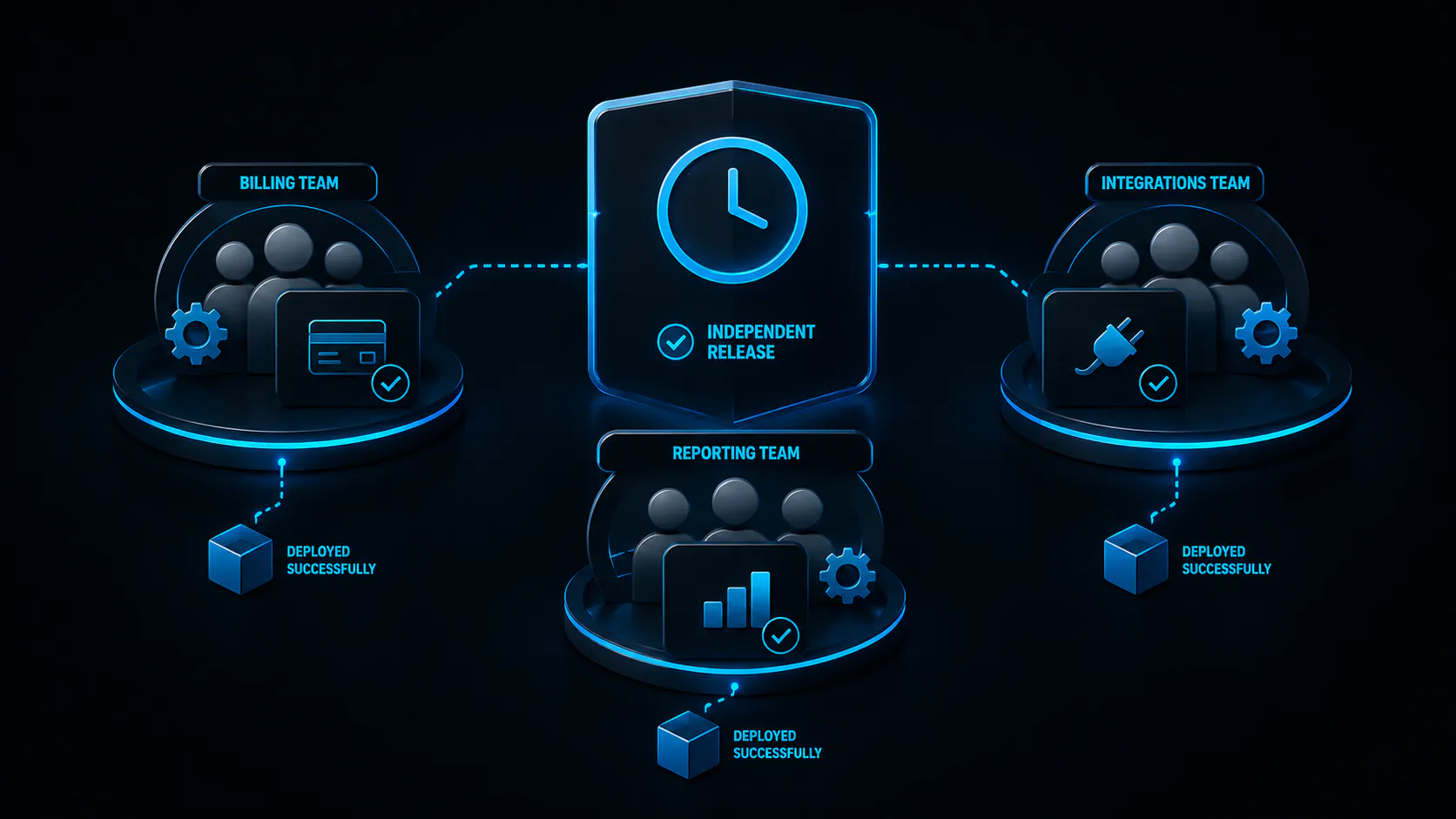


Microservices make sense when parts of a system need to scale, deploy, or fail independently. The question is no longer whether microservices are "better," but whether they solve a specific architectural problem your product already has.
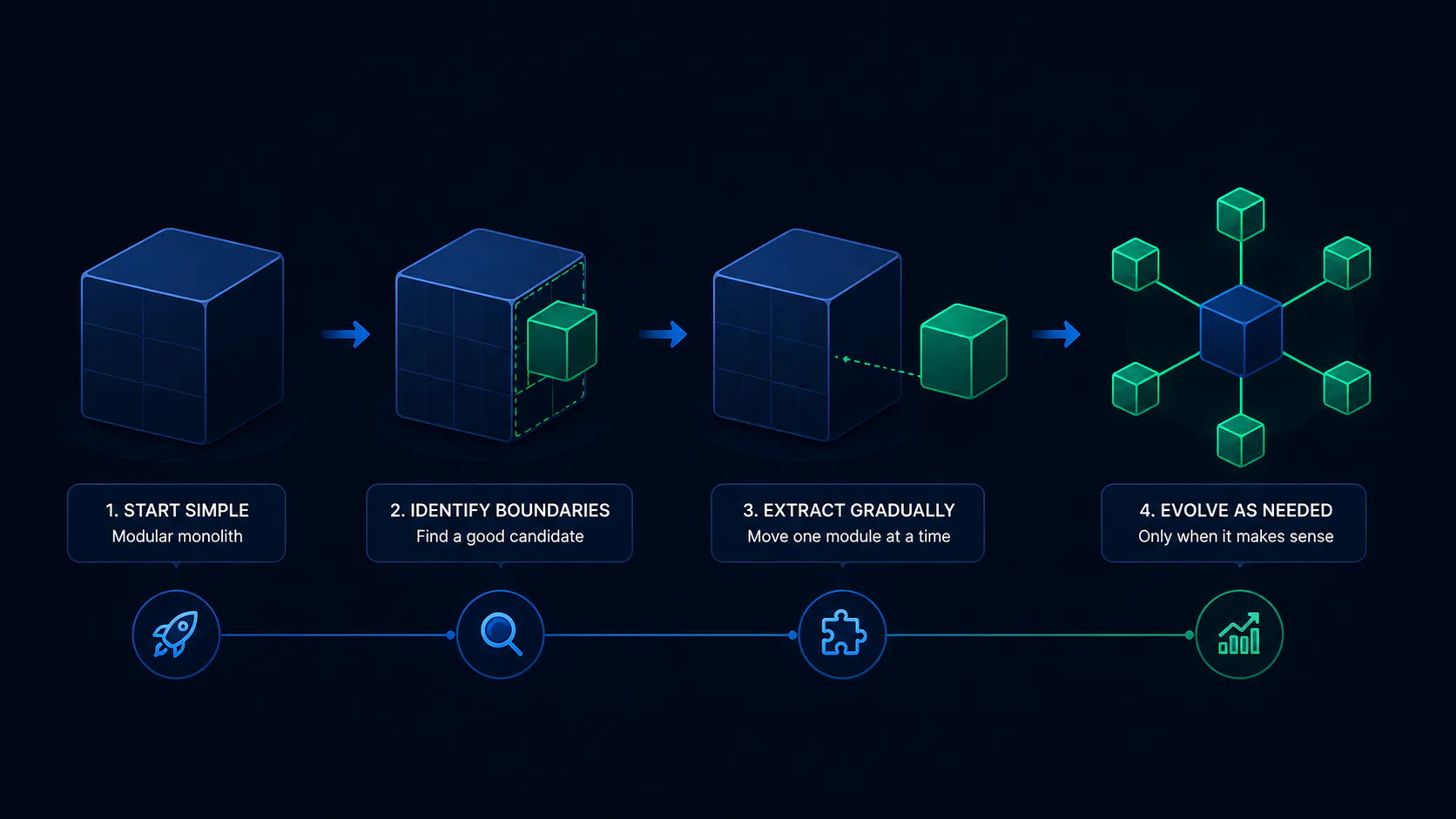
The clearest use cases: high-traffic features like checkout, teams blocked by a shared release cycle, workflows that must survive partial outages, complex domains such as payments or compliance, AI workloads, and gradual legacy modernization.
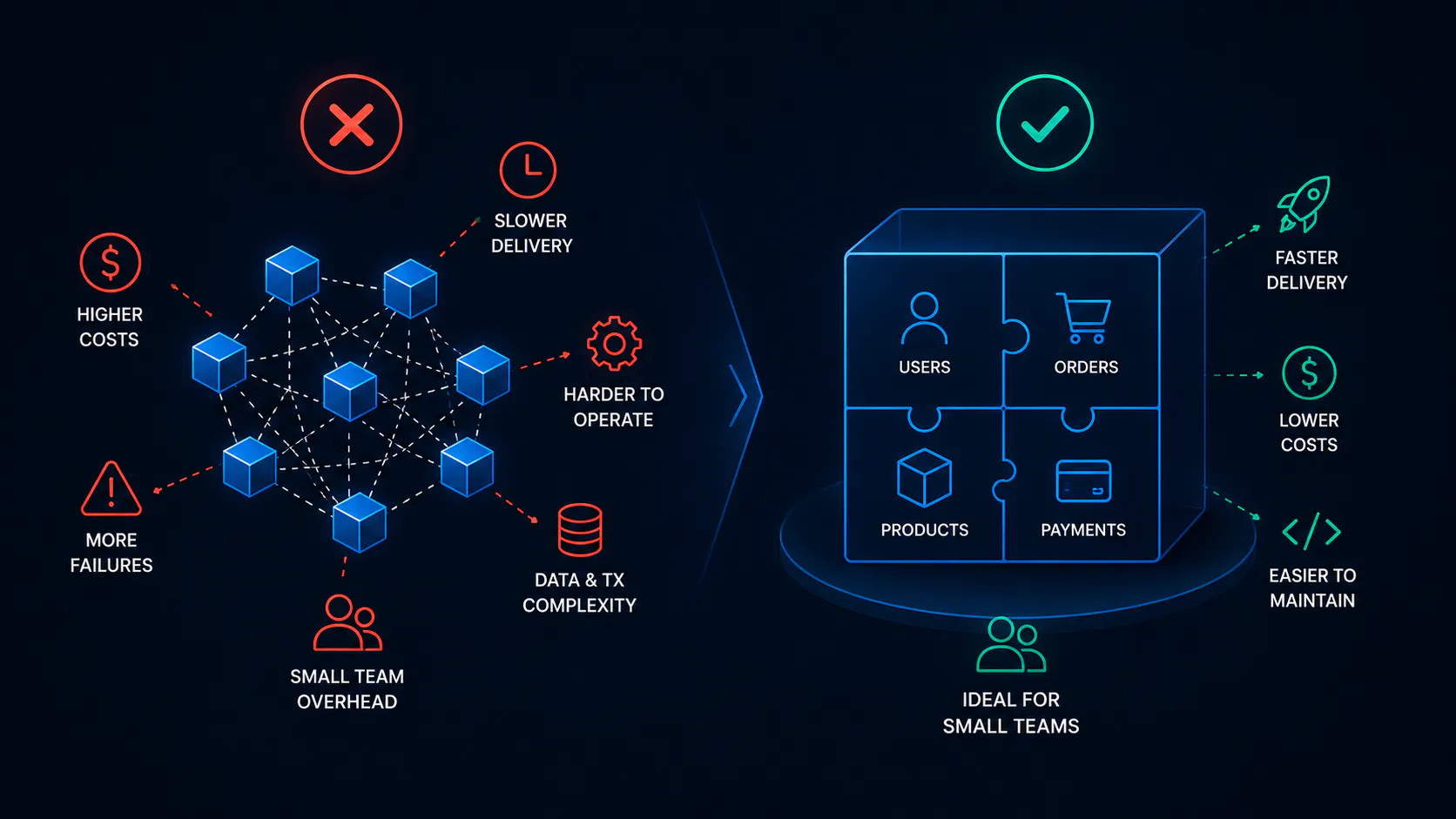
For an MVP or a small team, a modular monolith is usually the better choice.
When Do Microservices Actually Make Sense?
The most common mistake in architecture reviews is treating microservices as a response to size: the system got big, the codebase got messy, so the team breaks it apart.
But "big" is not an architectural problem. Coupling is.
Microservices earn their cost when parts of your system genuinely need different things:
- Different scaling curves - checkout spikes 40x during a campaign, the admin panel does not
- Different release cadences - two teams waiting on each other's QA cycle
- Different failure tolerances - a payment must survive an analytics outage
- Different owners - separate roadmaps, separate on-call
Microservices do not remove complexity. They relocate it - out of your codebase and into your infrastructure, network, and data model.
Function calls become network calls that can time out. A single transaction becomes a distributed workflow with eventual consistency. One deployment becomes twelve, each needing monitoring, rollback, and an owner.
That trade is worth making when the pain you are solving is bigger than the pain you are buying. Often it is not.
Why the Conversation Changed in 2026

Three things shifted the debate, none of them technical.
Cost stopped being abstract. Flexera's 2026 State of the Cloud report puts wasted cloud spend at 29% - the first increase in five years - with 85% of organizations naming cloud spend their top challenge. Over-provisioned, chatty distributed systems are where much of that waste sits.
Platform engineering matured. DORA's 2025 research found 90% of organizations now run some form of internal developer platform, and 76% have a dedicated platform team. Running services is genuinely less painful than it was in 2020.
AI workloads arrived with resource profiles that look nothing like a web API - a new and legitimate reason to split systems apart.
Adoption, meanwhile, levelled off - CNCF and SlashData's Q1 2026 research puts backend developers working with microservices at 39%, and advanced practices like chaos engineering or service mesh at just 6–7%.
Teams still adopt microservices. They just do it more selectively, with the bill in view.